
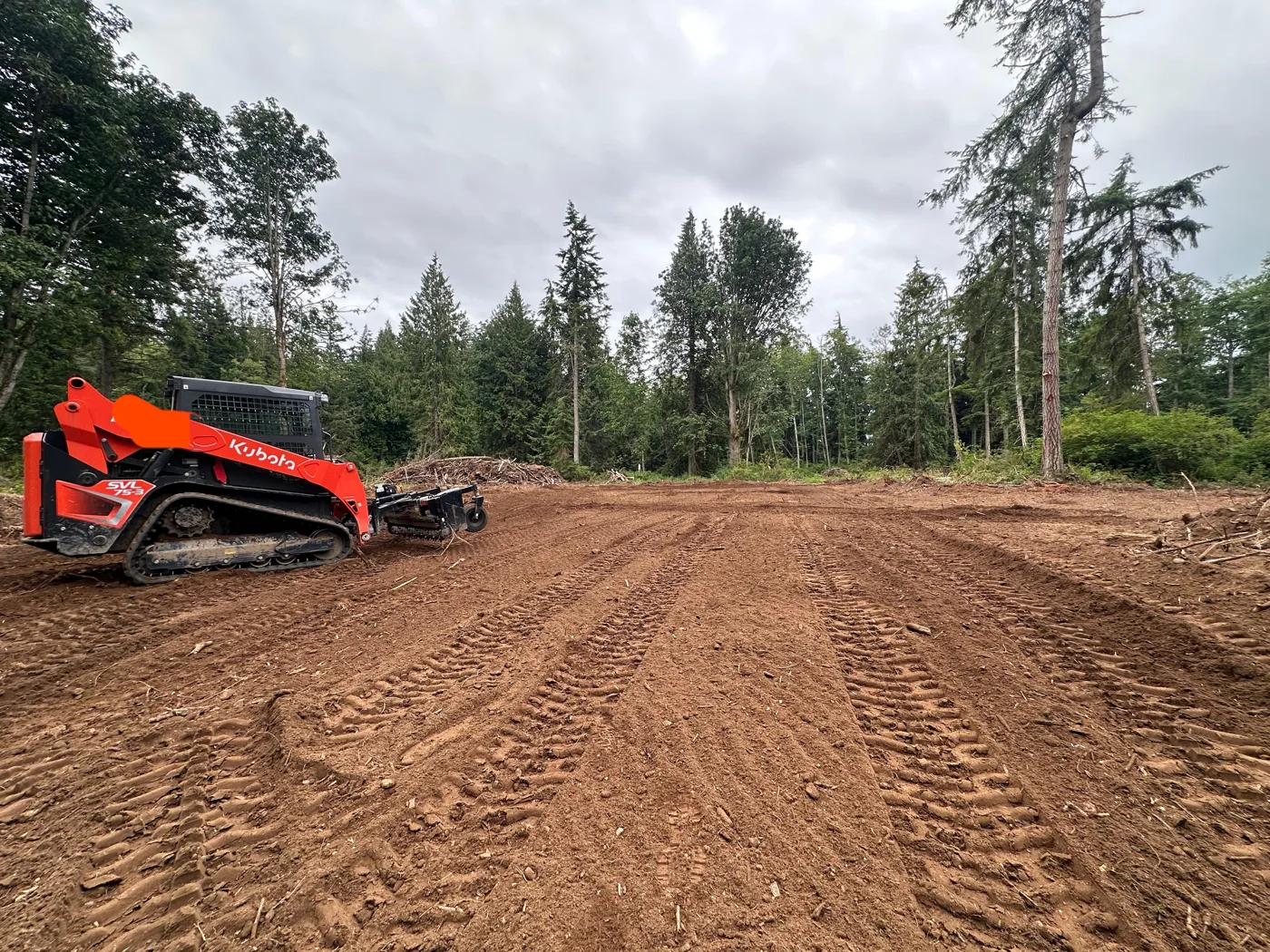
Preparing a lot for a new build around Rexburg: what has to happen before the foundation
Before a foundation can go in, the lot needs a walk-through, clearing, stump and brush work, a rough grade with a compacted building pad, an access drive that loaded trucks can use, and a haul-off of everything that does not belong. Around Rexburg, that work also has to account for shallow lava rock, wind, and a building season that mostly runs May through October.
Rexburg and Madison County have been among the fastest-growing corners of Idaho for years, and the corridor from Idaho Falls up through Ucon, Rigby, and Sugar City keeps filling in. A lot of that growth lands on ground that was farmed, pastured, or left in sage until now, and raw ground has to be made buildable before anyone can pour concrete. Here is the sequence, and the local realities that shape it.
| Step | What happens | Why it matters |
|---|---|---|
| 1. Walk the lot | Find pins, utilities, water paths, access | Problems found now are cheap; found later they cost real money |
| 2. Clear | Brush, sage, old fence lines, stumps out | The pad and driveway need clean ground, not buried roots |
| 3. Rough grade and pad | Topsoil stripped, dirt cut and filled, pad compacted | The foundation is only as good as the ground under it |
| 4. Access | Gravel construction entrance and drive base | Concrete trucks are heavy and spring ground is soft |
| 5. Haul off | Debris, spoil, and junk leave the site | Builders work faster on a clean lot |
Walk the lot before anything moves
An hour on foot saves more money than any machine. Find the survey pins so the work happens on your ground and the setbacks hold. Call 811 a few days ahead so buried utilities get marked for free. Figure out where water goes in April, because eastern Idaho lots that look bone dry in August can carry snowmelt across a corner every spring, and the house should sit out of that path.
Then place things on paper: where the pad goes, where the driveway meets the road, where the well and septic land if you need them. This is also the stage where a shallow test hole earns its keep. On parts of the bench and out toward Menan, basalt sits a few feet down or less, and finding lava rock with a test hole in October is a lot cheaper than finding it with a foundation excavation in May.
Clear what is in the way
With a plan set, the ground gets cleaned. On lots around here that means sagebrush, volunteer Russian olive along the ditches, wild rose and willow in the low spots, old fence lines with wire buried in the grass, and sometimes the remains of a windbreak row. Land clearing takes growth and debris down to workable ground across the pad, the driveway path, and the utility routes.
Trees on the pad site are their own step: a tree service fells them, and once the trees are down the stumps still have to come out. Anywhere a footing, slab, or driveway is going, roots and stumps get ground or dug out rather than buried, because buried wood rots and settles under whatever sits on top of it.
Clear only what the build needs. A stripped lot in this valley is a dust source every time the wind comes up, and the wind comes up a lot. Leaving the rest of the property in grass or sage until you actually need it keeps your topsoil where it belongs.
Rough grade and the building pad
This is the step the foundation lives or dies on. First the topsoil comes off the pad area and gets stockpiled, not hauled away. That dark silty loam is some of the best ground in Idaho, and you will want it back for the lawn and garden at final grade.
Then the subsoil gets cut and filled to design height and the building pad is graded and compacted in lifts, so the whole platform is uniform and tight. The pad sits slightly proud of the surrounding ground, shaped so water falls away from the house in every direction. Footings around here have to reach below frost, which runs deep in an eastern Idaho winter, so the foundation crew digs down from that finished pad. Your builder and the county set the exact depth, and a clean, level, compacted pad makes their dig faster and their formwork straighter.
Rough grading is also when drainage for the whole lot gets set: swales to carry spring melt around the pad, rough falls toward the road or a field, and no low spot left where water can pond against the house.
Give the trucks a way in
A loaded concrete truck is one of the heaviest things that will ever visit your property, and it shows up before the house does. Lumber trucks, well drillers, and the excavator all need the same thing: a firm route from the road to the pad that works even when the ground is soft.
The answer is to build the driveway early, at least to base level. Strip the path, lay fabric if the ground is soft, and put down a thick lift of compacted pit-run. That construction entrance becomes the base of the permanent gravel driveway later, so the money spent is spent once. Skip this step and a wet week turns the lot entrance into a rut field, and you pay for it in stuck trucks and tow bills instead. Our guide to building a gravel driveway that survives Idaho winters covers the full stack of layers.
Haul off what does not belong
Every cleared lot produces a pile: brush, stumps, rocks picked out of the grade, old wire and posts, and sometimes decades of farmyard leftovers. On rural ground some of it can burn with a seasonal permit or stay windrowed on a back corner. On a subdivision lot it all has to leave. A dump trailer moves brush, stumps, spoil dirt, and junk off site load by load, and hauling it as the work happens keeps the site clean instead of saving one giant mess for the end.
The Rexburg calendar
Timing matters more here than in most places, because the season is short. Ground around Rexburg is typically frozen or snow-covered from sometime in November into March or April, then soft through the thaw. Dirt work wants workable ground, and concrete wants warm weather, so the practical building window mostly runs May through October.
The smart sequence works backward from that: walk the lot and line up estimates in fall, clear brush and grind stumps in winter while frozen ground protects the surface, grade the moment the ground opens up. Costs stay honest too. Across the industry, rough grading a homesite typically runs $1,500 to $5,000, with full prep beyond that when clearing, stumps, and a driveway base stack on, and our land clearing cost guide breaks down that piece. Every lot is different, and the real number for yours comes from a free on-site estimate.
FAQ
When should I start site prep for a spring build in Rexburg? The fall before. Walk the lot and get estimates in the fall, clear brush and grind stumps over winter while the frozen ground protects the surface, then grade as soon as the frost is out and the ground dries, usually May. That puts your foundation crew on a ready pad at the front of the season instead of the back.
Do I have to clear the whole lot before building? No, and on a big rural lot you usually should not. Clear the building pad, the driveway path, the utility routes, and enough yard to work in, and leave the rest alone. Less clearing costs less, keeps the wind off your topsoil, and leaves you the option to shape the rest of the property later.
How much does it cost to prep a lot for building? Across the industry, rough grading a homesite typically runs $1,500 to $5,000, and full prep with clearing, stump work, a pad, and a driveway base can run well past that depending on the ground. Rock, brush, and haul-off move the number most. The real figure comes from a free on-site estimate.
Can site work happen in winter in eastern Idaho? Some of it. Brush clearing and stump grinding work fine on frozen ground, and winter is a smart time to book them. Grading, pad building, and compaction need thawed, workable dirt, so that work waits for spring. Foundations follow once the ground is open, usually May through October.
What is a building pad and why does it matter? The pad is the compacted, level platform of soil the foundation sits on, built slightly higher than the ground around it so water drains away from the house. A pad compacted in proper lifts keeps the foundation from settling. A pad thrown together from loose fill is how slabs crack later.
Who handles permits for clearing and grading? Building permits run through the city or county where the lot sits and are usually the builder’s or owner’s job. Clearing brush on open ground rarely needs one, but lots inside city limits, in subdivisions, or near canals and ditches can carry rules. One call to the local building department early settles it.
Get your lot build-ready
The site work is the least glamorous money in a new build and the most permanent. It is also the part that has to be lined up first. Glitter Gulch Ground Works is owner-operated and local to Rexburg, handling clearing, stump grinding, grading, driveway bases, and haul-off across Madison County and the surrounding valley, from Sugar City and St. Anthony down through Rigby, Ucon, and Idaho Falls. Estimates are free. Call 701-421-4235 or request a free estimate and get the ground work scheduled before the season fills.