
Stump grinding vs. stump removal: which one do you need?
Stump grinding chews a stump into chips 4 to 12 inches below grade and leaves the roots to rot in place. Stump removal digs the whole root ball out of the ground. Grinding costs less and tears up less of your yard, so it is the right call for most stumps. Removal earns its cost when something is getting built on that exact spot.
What each one actually does
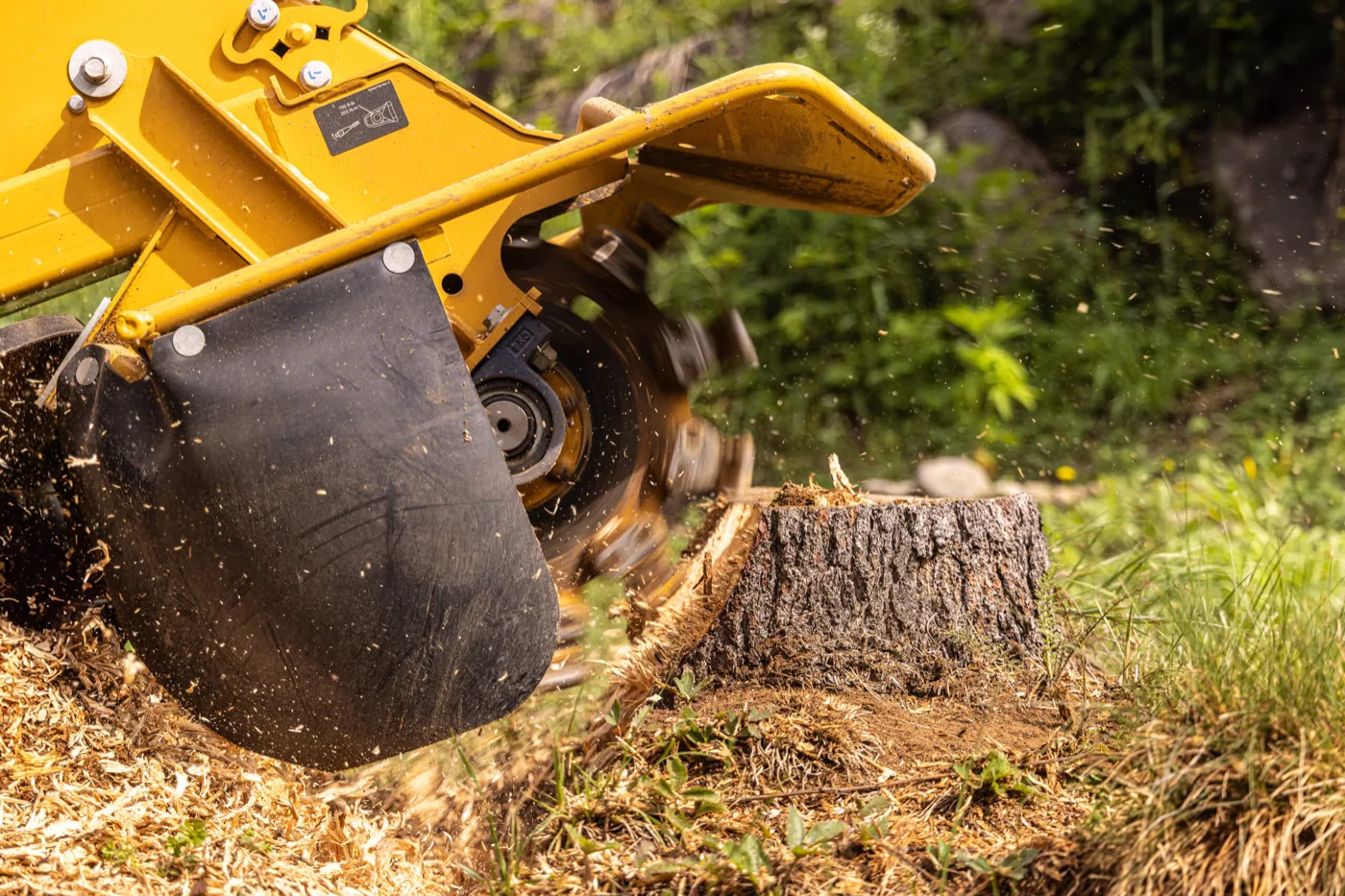
Stump grinding uses a machine with a carbide-toothed wheel that sweeps back and forth across the stump, shaving it into chips until the whole thing sits below ground level. The lateral roots stay in the soil and rot over time. What is left is a shallow crater full of chips that gets backfilled, and in a season the spot disappears into the lawn.
Stump removal is excavation. A machine digs around the stump, rips the root ball out of the ground, and leaves a hole that can swallow a wheelbarrow. The stump and roots then have to go somewhere, and the hole needs backfill. It is more work, more cost, and more repair afterward, which is why it only makes sense when the ground itself has to be clean.
Grinding vs. removal at a glance
| Stump grinding | Stump removal | |
|---|---|---|
| Method | Ground into chips below grade | Root ball dug out whole |
| Depth | 4–12 in below grade, deeper on request | Full root ball, often 1–3 ft down |
| Typical market cost per stump | $100–$400 | $150–$500+, often 2 to 3 times the grind price |
| Yard damage | Minimal, machine footprint only | Big hole plus equipment tracks |
| What is left | Chips and buried roots that rot in place | Open hole needing backfill and compaction |
| Ready to build on | No | Yes, once backfilled and compacted |
| Best for | Lawns, pastures, windbreak rows, mowing hazards | Foundations, slabs, driveways, replanting in the same hole |
What each one costs
Across the industry, stump grinding runs $100 to $400 per stump, and a lot of contractors figure it at $2 to $5 per inch of diameter measured at the widest point. Most carry a minimum service charge in the $150 to $250 range, so one lone stump costs more per stump than five on the same visit. Full removal typically lands two to three times higher than grinding the same stump, because digging, hauling the root ball, and backfilling the hole all take real time.
Those are market ranges, not a quote. A stump’s true price depends on its size, its species, what is around it, and how many friends it has. The real number comes from a free on-site look, not a chart.
When grinding is the right call
For most stumps in most yards, grinding wins. It answers the practical problems a stump causes: the mower can’t get near it, the trimmer line dies against it, kids trip over it, and it sits there sprouting mushrooms for a decade while it rots on its own schedule.
It fits eastern Idaho properties especially well because so many of our stumps come in rows. Farmyards around Rexburg, Sugar City, and St. Anthony are ringed with old windbreaks: cottonwoods and Lombardy poplars planted decades ago to knock down the wind, with blue spruce and Siberian elm mixed in. Those rows age out, the trees come down, and what is left is ten or twenty stumps in a straight line. Grinding a row like that on one visit is far cheaper per stump than digging each one out, and the ground stays level enough to farm or mow right up to the fence.
Grinding is also the answer for the single big cottonwood stump in a front yard in Rigby or Idaho Falls, where an excavator would wreck the sprinkler lines and the lawn on its way in. The grinder reaches the stump, does its work, and leaves the rest of the yard alone.
When you actually need full removal
The dividing line is simple: is anything getting built on that spot? A garage slab, a shop footing, an addition, a concrete driveway, a retaining wall. Buried roots and chips rot, rotting wood settles, and concrete poured over settling ground cracks. If construction is coming, the root system needs to come out and the hole needs structural backfill, compacted in lifts, so the ground under the pour is solid.
The same logic covers replanting. A new tree set into old grindings struggles, because fresh chips tie up nitrogen in the soil as they break down. If a new tree is going in the same hole, dig the old root mass out and start with real dirt.
On a build site, stump removal usually happens as part of the bigger land clearing job rather than stump by stump. If that is where your project is headed, our guide to preparing a lot for a new build around Rexburg lays out the full order of operations.
What happens to the chips
People are always surprised by the pile. Grinding fluffs a dense stump into loose chips, so the mound sitting on your lawn afterward is bigger than the stump was. There are three ways to handle it.
Leave the chips in the crater and mound them slightly, and they will settle as they decompose. Cheap and easy, but expect a soft dip there for a year or two, and grass seeded straight into chips comes up yellow and thin while the wood ties up nitrogen.
Rake them out and use them as mulch around trees and beds. Fresh chips work fine on the surface; the nitrogen problem only bites when they are mixed into soil you are trying to grow in.
Or have the chips loaded and hauled off, and the hole filled with topsoil so the spot is ready to seed the same week. On a small lot with no place to spread mulch, hauling is usually worth it.
Will the stump grow back?
Here is the honest version, because there is a myth on each side. Grinding does kill the tree. Once the stump is ground below grade, the growing tissue is gone, and conifers like spruce and pine are finished for good. They do not resprout, period.
The complication is suckering species. Cottonwood, poplar, aspen, willow, Russian olive, and Siberian elm can push new shoots up from live roots left in the soil. That is a trait of the roots, so it happens after grinding and can even happen after removal, since no excavation gets every lateral root. The fix is patience, not a bigger machine: cut or mow the suckers every time they show, and the roots exhaust themselves, usually within a couple of seasons. Around here the worst offender is Russian olive, which is one more reason to deal with it thoroughly the first time.
FAQ
How much does stump grinding cost? Most contractors charge $100 to $400 per stump, or $2 to $5 per inch of stump diameter, with a minimum service charge of roughly $150 to $250 per visit. Big cottonwoods cost more than small fruit trees, and the per-stump price drops when several get ground on the same trip. A free on-site look sets the real number.
How deep does a stump grinder go? A standard grind runs 4 to 12 inches below grade, which is plenty to plant grass, run a mower, or till a garden over the spot. Deeper grinds are possible when something is getting built there, but at that point digging the stump out is usually the better tool for the job.
Is stump removal better than stump grinding? Only when something is getting built on that exact spot. Removal takes out the root ball, so it leaves clean ground for a footing or slab, but it costs two to three times more and leaves a big hole. For a lawn, pasture, or windbreak row, grinding does the same visual job for less money and less mess.
Can I pour concrete over a ground stump? It is a gamble, and most concrete guys will tell you not to. The buried roots and chips rot and settle over the years, and the slab above can crack and sink. If a garage, shop, driveway, or addition is going over the spot, get the root system dug out and the hole backfilled with compacted fill first.
Will a cottonwood stump grow back after grinding? The stump itself is done, but cottonwood, poplar, aspen, and Russian olive can send up suckers from roots left in the soil. That happens whether you grind or not. Mow or cut the shoots each time they appear and the roots run out of stored energy, usually within a couple of seasons.
What happens to all the wood chips? Grinding turns a stump into a mound of chips bigger than the hole it came out of. You can rake them out as mulch, leave them to settle in the hole, or have them hauled off and the spot topped with soil. For a clean lawn repair, hauling the chips and filling with dirt works best.
Got a stump in the way?
If it is one cottonwood in the front yard or a whole windbreak row along a field, the answer starts the same way: look at it, measure it, and give you a number. Glitter Gulch Ground Works is owner-operated out of Rexburg and grinds stumps across the Upper Valley, from St. Anthony down through Rigby and Idaho Falls. Estimates are free. Call 701-421-4235 or send the details and you will get a straight answer on grinding, digging, or leaving it alone.